
Will The Chiropractor Only Adjust My Knee Or Treat Other Areas Too?
Home / Blog / Will the Chiropractor Only Adjust My Knee or Treat Other Areas Too?
Will The Chiropractor Only Adjust My Knee Or Treat Other Areas Too?
By Butler Family Health Center · Published 2026-09-20 · Last updated 2026-09-20
Chiropractors almost never treat just the knee on its own. Will the chiropractor only adjust my knee or treat other areas too? The honest answer is that most visits include the spine, hips, and sometimes the ankle, because the knee connects to all of them. A misaligned pelvis or a tight lumbar spine changes how the knee moves and how much stress it absorbs with every step. So we typically assess your full posture and gait before deciding which areas to adjust. Treating the root cause alongside the knee leads to faster relief and longer-lasting results. Expecting care for only one joint is a common assumption, but the body simply doesn’t work that way.
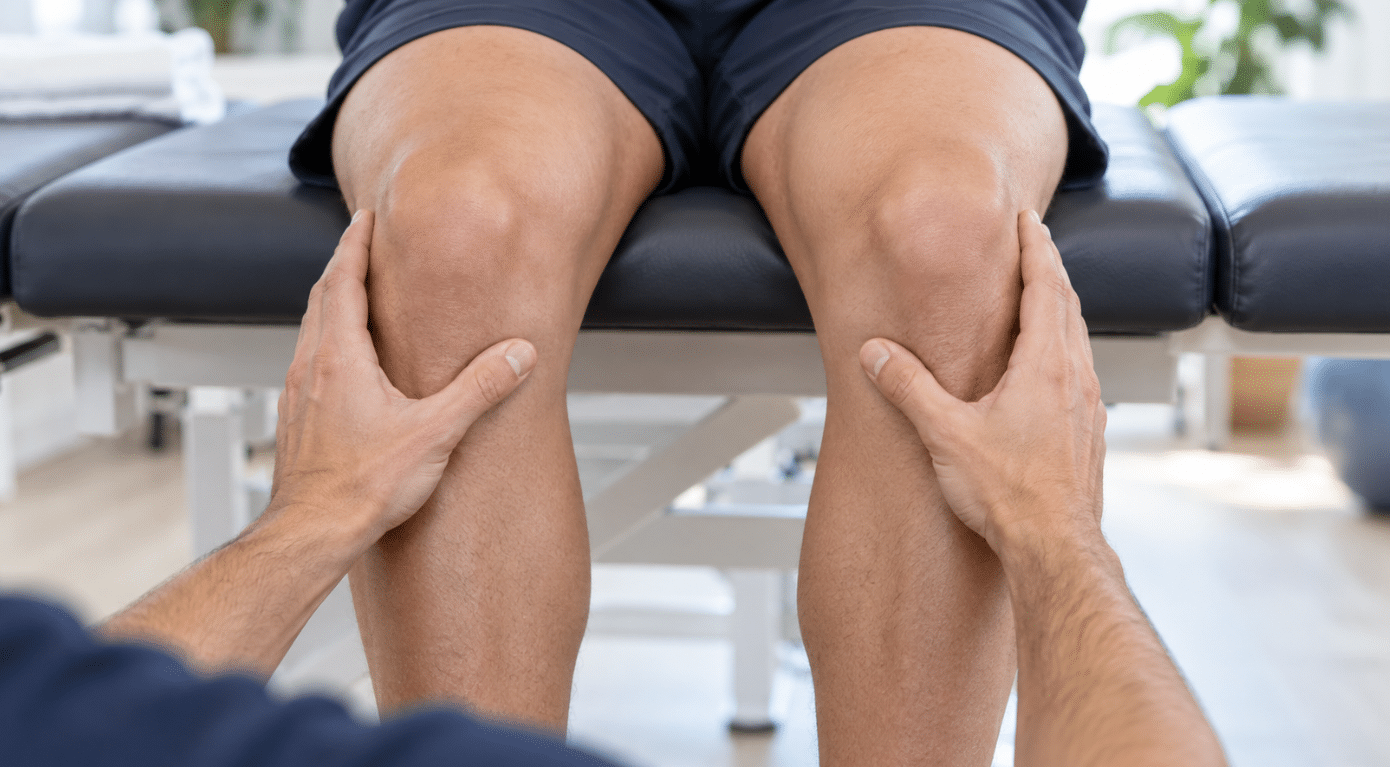
Why Do Chiropractors Treat More Than Just Your Knee?
Chiropractors treat the whole musculoskeletal system, not just the joint that hurts. Your body works as one connected system. A problem in one joint shifts stress to the joints nearby, and that shift adds up over time.
Knee pain is often a symptom of a bigger alignment issue higher up the chain. The hip, pelvis, or lumbar spine is frequently the true source, even when the knee is where you feel the discomfort. Treat only the knee without addressing root causes, and the pain is likely to come back sooner. We see that pattern regularly.
Chiropractors are trained to find the origin of pain, which isn’t always where the pain is felt. Looking at the whole picture is what lets us actually fix the problem rather than just quiet it down for a few weeks.
What Does Whole-Body Chiropractic Care Mean?
Whole-body chiropractic care means your chiropractor checks your full posture and movement before treating any single joint. The exam includes the spine, pelvis, hips, knees, and ankles. Depending on your activity level, we may also assess your wrists or shoulders.
The goal is to restore balanced movement so no single joint carries too much load. When every part of the chain moves the way it should, the knee is no longer compensating for problems above or below it.
A knee-only approach may reduce local soreness, but without addressing why the soreness started, the pain tends to come back. Treating only the knee leaves upstream causes intact, so relief is often short-lived. Working on the contributing factors at the same time is what keeps the knee from flaring back up.
How Does the Knee Connect to the Spine and Hips?
The knee sits in a chain between the foot and the lower back, and movement in each area affects all the others. This is plain anatomy, not a loose analogy. Each joint influences the angle and load of the joint above and below it.
A tilted pelvis changes how the thigh bone sits in the hip socket. That shift rotates the knee inward or outward, and the knee then absorbs force at an angle it wasn’t designed to handle. Over weeks or months, that abnormal angle causes pain, swelling, or wear.
Lumbar spine misalignment can cause one leg to carry more weight than the other. The knee on the overloaded side absorbs extra force with every step. Flat arches or ankle pronation also travel upward and stress the inner knee ligaments. That’s a very common pattern in active patients, and it’s easy to miss if you’re only looking at the knee itself.
What Is the Kinetic Chain and Why Does It Matter for Knee Pain?
The kinetic chain is the sequence of joints and muscles that work together during movement. When one link in the chain is stiff or misaligned, extra force travels to the next available joint, and the knee is often that next joint. Chiropractors use this concept to find the true source of your knee symptoms rather than treating only the location of pain. Correcting the weak link in the chain takes pressure off the knee and allows it to heal.
What Does a Full Chiropractic Exam for Knee Pain Look Like?
A chiropractic exam for knee pain starts with a head-to-toe posture and movement assessment, not just a look at the knee. We’re building a picture of how your entire body moves before placing hands on any single joint.
Here’s what we actually do during that exam:
- Gait analysis: your chiropractor watches you walk across the room to spot limping, rotation, or an uneven stride length.
- Postural assessment: leg length, shoulder level, and hip height are checked to identify any tilt or lean in the skeleton.
- Range of motion testing: hip mobility and lumbar spine movement are measured to find stiffness that could be loading the knee.
- Orthopedic and neurological testing: specific tests rule out ligament tears, nerve involvement, or pain referred from the lower back.
- Soft tissue palpation: your chiropractor presses along the IT band, glute muscles, and calf to find tightness that places extra strain on the knee.
After these steps, we have a clear picture of which areas are contributing to your knee pain. Imaging such as X-rays may be ordered if the physical exam suggests a structural issue worth evaluating further. All of this happens before any adjustment is made.
Which Other Body Areas Get Adjusted During a Knee Visit?
During a knee-focused visit, chiropractors commonly also adjust the lumbar spine, sacroiliac joint, hip, and ankle. Each area plays a direct role in how the knee moves and how much stress it absorbs.
The lumbar spine comes first in most cases. Reducing nerve tension there improves leg muscle function and knee stability. The sacroiliac joint is next when the pelvis is uneven, because leveling it distributes weight more evenly across both knees. A hip adjustment directly changes how the kneecap tracks during movement by restoring proper femoral rotation. At the other end of the chain, correcting ankle and foot mechanics reduces the upward stress that would otherwise land on the knee. We also work on soft tissue around the knee itself, including the IT band, quadriceps, or hamstrings, when muscle tension is pulling the knee out of alignment.
Not every patient needs every area addressed. Your chiropractor chooses adjustments based on what the exam reveals, not a fixed routine.
Will the Chiropractor Crack My Spine If I Only Came In for My Knee?
Yes, a spinal adjustment is common even when your main complaint is knee pain, because the two are mechanically linked. Your chiropractor will explain what areas need adjustment before touching you. And you always have the right to ask questions or decline any part of the treatment. No exceptions.
Spinal adjustments for knee patients are usually gentle and targeted to the lumbar spine. Every adjustment in the plan connects back to improving how your knee moves, so nothing is being done to your back just to fill time.
Can You Ask the Chiropractor to Focus Only on Your Knee?
Yes, you can request knee-only treatment, and a good chiropractor will respect that preference. We’ll explain the trade-offs so you can make an informed choice. That conversation is part of good care, not a sales pitch.
Focusing only on the knee without correcting upstream issues often means slower healing and more return visits over time. The pain may ease temporarily, but without correcting the hip or spinal alignment driving the problem, the knee tends to flare up again. Some patients prefer a step-by-step approach, starting with the knee and expanding the treatment area in later visits. That’s a valid path, especially if you’re new to chiropractic care or are uncertain about spinal adjustments. We can build a plan that fits your comfort level.
Always tell your chiropractor about any areas that feel sensitive, painful, or where you’d prefer no treatment. The best outcome comes from you and your chiropractor working together.
How Many Visits Does Chiropractic Care for Knee Pain Usually Take?
The number of visits needed for knee pain varies depending on how long the problem has been present, its underlying cause, and how well you respond to care. Your chiropractor can give you a more specific sense of timing after a thorough exam.
Acute knee pain from a recent injury often responds faster than chronic knee pain that has built up over months or years. Chronic pain typically involves more tissue changes and more ingrained movement patterns. We reassess progress periodically and adjust the plan based on how you’re responding. If improvement is faster than expected, the visit count goes down. If the knee is slower to respond, we identify why and change the approach.
Guided home exercises and stretches between visits support recovery and reinforce the work done in the office. Skipping those or missing scheduled visits is one of the most common reasons recovery stalls. The in-office adjustment starts the correction, but the home work is what helps the body hold the change.
What Factors Make Knee Chiropractic Care Take Longer?
Care takes longer when knee pain is combined with spinal misalignment, muscle weakness, or a history of prior injury at the same joint. Age-related joint degeneration, excess body weight, and jobs that require standing or kneeling all day also extend the timeline.
When Should You See a Chiropractor for Knee Pain in Centennial, CO?
See a chiropractor for knee pain when the ache lasts more than a few days, limits your movement, or returns after rest. Waiting too long allows compensating patterns to develop in the hip and spine, which makes the overall problem more complex to resolve. Honestly, we’d rather you come in before those patterns get established.
Chiropractic is a strong first step for knee pain caused by overuse, poor posture, IT band tightness, or mild arthritis. Active residents in Centennial and the surrounding area often develop knee problems from repetitive motion and outdoor activity. Those cases respond well to the kinetic chain approach described above. After a car accident, a chiropractor may play a role in evaluating musculoskeletal injuries as part of a broader care team, depending on the nature of the injuries and the providers involved.
See a ChiropractorGo to the ERKnee aches for more than a few daysKnee is severely swollen and hot to the touchPain returns after rest or activityKnee buckles or gives out completely under weightStiffness limits normal walking or stairsVisible deformity or bone appears out of placeIT band pain, runner’s knee, or overuse injuryInjury occurred in a car accident with high impactMild arthritis flare-upKnee locked in one position and cannot be straightened
Seek emergency care first if your knee is severely swollen, buckles under weight, or was injured in a serious accident. After medical clearance, chiropractic knee pain treatment in Centennial can address the alignment and soft tissue factors that follow an injury.
What You Should Take Away From This
Chiropractors almost always treat more than just the knee because the knee is part of a connected movement chain that includes the spine, hips, and ankles. Addressing related areas alongside the knee leads to faster recovery, fewer return visits, and longer-lasting relief. You can always ask your chiropractor to explain what areas are being treated and why. Good care is always a conversation between you and your provider.
If your knee has been slowing you down, explore chiropractic knee pain treatment in Centennial to find out how a full-body approach can help you move better.