
What Is The Difference Between Spinal Decompression And A Regular Chiropractic Adjustment In Centennial?
Home / Chiropractic Care in Centennial / What Is The Difference Between Spinal Decompression And A Regular Chiropractic Adjustment In Centennial?
What Is The Difference Between Spinal Decompression And A Regular Chiropractic Adjustment In Centennial?
By Butler Family Health Center · Published 2026-09-17 · Last updated 2026-09-17
Spinal decompression treatments and a regular chiropractic adjustment are two different treatments. One uses a motorized table to gently stretch the spine, while the other uses hands-on force to move specific joints. Centennial residents often ask what is the difference between spinal decompression and a regular chiropractic adjustment in Centennial, and the answer comes down to method, target structure, and the condition being treated. Spinal decompression is designed to relieve pressure on discs and nerves over a series of sessions, most often for herniated or bulging discs. A chiropractic adjustment restores motion to joints that are stuck or misaligned, usually in a single targeted movement. Both are safe, non-surgical options, but they’re not interchangeable. We’ll evaluate your specific condition before recommending one or both.
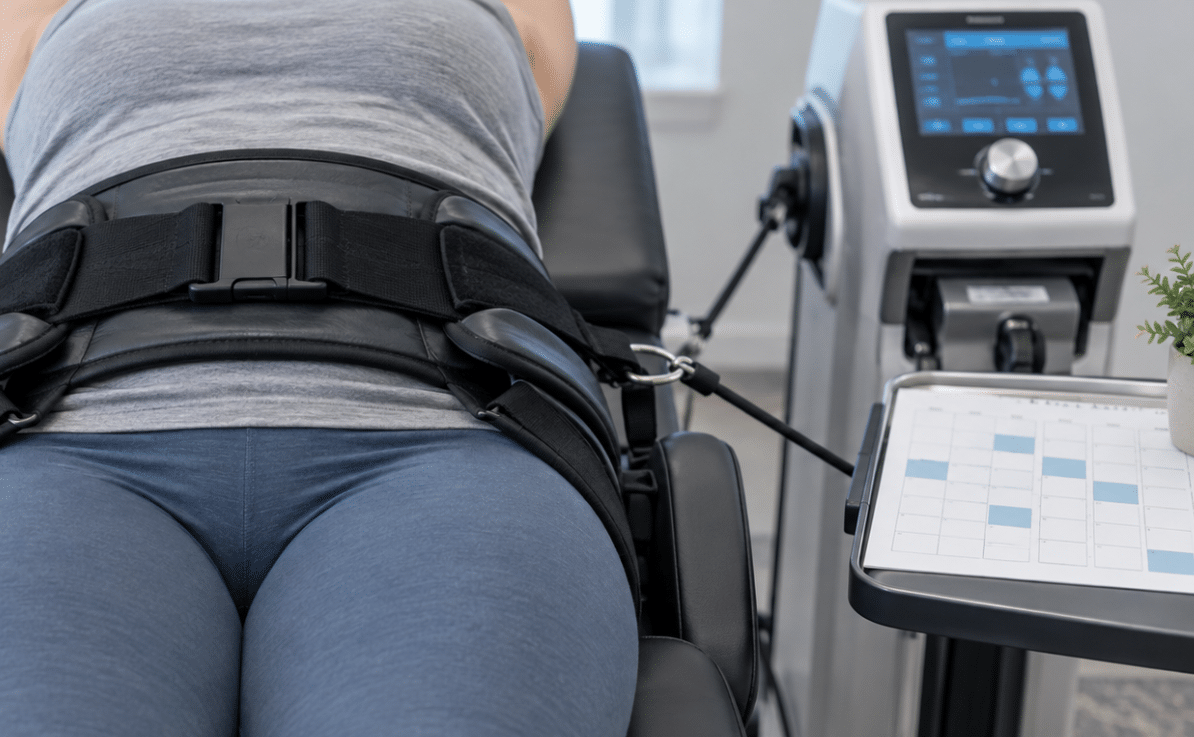
What Is Spinal Decompression?
Spinal decompression is a non-surgical therapy that uses a motorized table to slowly and gently stretch the spine. The stretching creates negative pressure inside spinal discs. That negative pressure can pull a herniated or bulging disc back toward its normal position, taking stress off nearby nerves.
It also allows water, oxygen, and nutrients to flow back into the disc, which supports natural healing inside a structure that has very limited blood supply on its own. Resources such as those published by the National Institute of Neurological Disorders and Stroke provide background on how spinal disc anatomy and nerve compression relate to conditions like sciatica and lower back pain.
Most patients need multiple visits spread over several weeks to see lasting results. No cracking. No sudden force.
Two main types of decompression devices exist: motorized traction tables and inversion-based devices. Motorized traction tables offer computer-controlled tension, which makes the force precise and repeatable across every session. That consistency matters more than it might sound — the disc needs gradual, controlled decompression, not a random pull.
How Does a Spinal Decompression Table Work?
A spinal decompression table splits into two sections. The lower half slides back and forth while the upper half stays still, creating a gentle pulling force along the length of the spine. Here is what happens during a typical session.
First, we fit you with a harness around your hips and have you lie flat on the table. The harness connects to the moving lower section. From there, we program the table for the correct angle and amount of pull based on your specific condition and any imaging we have. The table then cycles through phases of traction and relaxation in a controlled rhythm. That rhythm matters because if your muscles brace against the pull, you won’t get the full benefit. When the session ends, we remove the harness and have you rest briefly on the table before you get up.
The computer-controlled tension means the force is consistent and precise across every cycle. The result doesn’t depend on manual effort from us.
What Is a Regular Chiropractic Adjustment?
A chiropractic adjustment is a hands-on technique where the chiropractor applies a quick, controlled force to a specific spinal joint to restore normal movement. The goal is to correct a joint that’s misaligned or not moving correctly. Chiropractors call this type of joint dysfunction a subluxation.
The familiar popping sound that sometimes happens during an adjustment is gas releasing from the joint space. Harmless. Nothing forced out of place, that part’s not as alarming as it sounds.
Adjustments take only seconds to perform, and we can often address multiple joints in a single short visit. Common tools include the chiropractor’s hands, a small activator instrument, or a drop-piece table segment that adds a brief downward movement to assist the thrust.
Adjustments treat a wide range of everyday complaints. Neck pain, low back stiffness, tension headaches, whiplash from a car accident, and sports injuries all respond well for most patients.
What Happens to Your Spine During an Adjustment?
When we apply force to a stuck joint, the joint surfaces briefly separate, releasing built-up gas and restoring motion to the segment. This release is called cavitation, the same physical process that happens when you crack your knuckles.
Restoring motion to the joint sends a signal through the nervous system that can reduce muscle tension and pain in the surrounding area.
The joint doesn’t move out of place during this process. The adjustment brings it back into its correct range of motion rather than pushing it beyond normal limits. Most patients feel immediate relief, or at least a sense of looseness, right after the adjustment is done.
How Do the Techniques Differ From Each Other?
The biggest difference is that spinal decompression stretches the entire disc and nerve space over time, while a chiropractic adjustment targets a single stuck joint in one quick motion. Two separate layers of the spine, addressed by two separate methods.
FeatureSpinal DecompressionChiropractic AdjustmentForce TypeSlow, sustained tractionQuick, specific thrustTarget StructureSpinal discs and nervesSpinal joints and surrounding musclesNumber of SessionsMultiple visits over weeksOften one to a few visitsEquipment UsedMotorized traction tableChiropractor’s hands or small tool
Decompression works on soft tissue structures like discs and nerves. Adjustments work on joints and the muscles attached to them. They address different layers of the same spinal system, so we use them for different reasons, and sometimes for both reasons at once.
One thing worth knowing up front: decompression requires a longer commitment before you feel results. Adjustments often produce faster noticeable relief, but an adjustment alone can’t reverse disc herniation or restore disc height. We look at which layer is causing your symptoms before choosing one or both approaches.
Which Conditions Does Each Treatment Target?
Spinal decompression is best suited for disc-related conditions, while chiropractic adjustments work best for joint-related pain and stiffness.
Spinal decompression is commonly used for herniated discs, bulging discs, degenerative disc disease, sciatica caused by disc pressure on a nerve root, and spinal stenosis (narrowing of the spinal canal).
Chiropractic adjustments are commonly used for low back pain, neck stiffness, tension headaches, whiplash from a car accident, sports injuries, and general posture problems.
These conditions come up all the time with Centennial patients, especially people whose days involve a lot of sitting, commuting, or desk work. That kind of load adds up faster than most people expect.
Some conditions overlap. Sciatica, for example, can sometimes respond to both treatments depending on its root cause. We use imaging or a physical exam to figure out which structure is actually driving your symptoms before recommending a path forward.
Is Spinal Decompression or Adjustment Better for Sciatica?
The answer depends on what’s causing the sciatica. If a compressed or herniated disc is the source, decompression is usually the better starting point because the disc itself needs to be relieved of pressure.
If the sciatic nerve is being irritated by a misaligned pelvic joint rather than a disc, an adjustment is often more effective. The joint is the primary problem, so that’s where we start.
We look at several factors before deciding which approach to use: where the disc damage shows up on imaging, whether your pain radiates below the knee (a sign of deeper nerve involvement), how long symptoms have been present, whether you have numbness or weakness in the leg, and how you’ve responded to any prior treatment.
In many cases, both treatments are used together. Decompression relieves disc pressure while adjustments restore pelvic alignment at the same time.
What Does Each Session Feel Like for the Patient?
Most patients describe spinal decompression as a gentle pulling sensation. A chiropractic adjustment, by contrast, feels like a quick pressure followed by an immediate release.
During a decompression session, you lie on a padded table and feel a rhythmic stretch-and-relax cycle throughout the lower back or neck. The experience is gradual and controlled. Patients fall asleep on the table more often than you’d think, which tells you plenty about how gentle it is.
During an adjustment, you feel a moment of firm pressure on one spot on the spine, sometimes followed by a pop or click. After that, the area typically feels looser or lighter almost immediately.
Neither treatment should cause sharp pain. Mild soreness after an adjustment for up to 24 hours is normal, similar to post-exercise muscle soreness. Decompression rarely causes that same soreness because the force is gradual and spread across the session rather than applied in a single moment.
If you’re nervous about cracking sounds, you’ll probably find decompression more comfortable at first. The experience is quieter, the table does the work, and there are no surprises. Knowing what to expect before your first visit helps you walk in relaxed rather than tense, which actually helps both treatments work better.
Can You Get Spinal Decompression and a Chiropractic Adjustment at the Same Visit?
Yes. We can combine both treatments in a single visit when your condition calls for it. The two treatments work on different structures, so using both in sequence makes sense when you have joint dysfunction and disc involvement at the same time.
One common approach is to perform the adjustment first to restore joint motion, then apply decompression to relieve disc pressure. Freer joints tend to respond better to traction because the spine isn’t fighting against stuck segments during the stretch.
Not every patient is a candidate for both treatments on the same day. We review each visit based on current symptoms and how the spine is responding to the care plan so far.
There are conditions that may prevent combining both treatments, including a recent spinal fracture, active osteoporosis, pregnancy in later stages, and certain surgical hardware inside the spine.
Patients recovering from a car accident sometimes present with both joint misalignment and disc irritation at the same time, which makes a combined approach worth talking through with us.
Who Should Not Get Spinal Decompression?
Spinal decompression is not recommended for people with spinal fractures, severe osteoporosis, spinal tumors, metal implants in the spine, or advanced pregnancy. Each of these conditions changes how the spine responds to traction force in ways that can cause harm rather than relief.
Patients with an abdominal aortic aneurysm should also avoid traction-based therapy. The harness and pulling force can place stress on abdominal structures in ways that aren’t safe for that condition.
A thorough intake exam and full health history review will screen for these conditions before any decompression session begins. Most healthy adults with disc-related pain are good candidates once we’ve cleared them through that intake process.
Which Treatment Is Right for You in Centennial?
The right treatment depends on your diagnosis. Disc problems generally point to decompression, joint problems generally point to adjustment, and many Centennial patients end up needing both.
If your pain is sharp, radiating down a leg or arm, and linked to a disc injury, ask us about decompression as the primary approach. If your pain is localized, connected to stiffness or a recent accident, and worsened by specific movements, adjustment is usually the starting point.
The best next step is a full chiropractic exam. We’ll review your symptoms, test your range of motion, and may request X-rays or refer you for an MRI before recommending a treatment plan. At Butler Family Health Center, a new patient evaluation follows this same process. For a full overview of what our care includes and how we approach spine health, explore our chiropractic care in Centennial page to see what a first evaluation covers.
The Bottom Line
Spinal decompression uses a motorized table to relieve disc and nerve pressure over multiple sessions. A chiropractic adjustment uses hands-on force to restore motion to a specific stuck joint quickly. Many Centennial patients benefit from both treatments together, especially after a car accident or with a long-standing disc problem. If you want to understand all the options available to you, our chiropractic care in Centennial page explains what a full evaluation includes and how we build a plan around your specific condition.