
How Soon Can I Get A Knee Pain Chiropractic Appointment In Centennial?
Home / Blog / How Soon Can I Get A Knee Pain Chiropractic Appointment In Centennial?
How Soon Can I Get A Knee Pain Chiropractic Appointment In Centennial?
By Butler Family Health Center · Published 2026-09-20 · Last updated 2026-09-20
Most people asking how soon can I get a knee pain chiropractic appointment in Centennial will find that availability varies by clinic, day, and how busy the schedule is. At Butler Family Health Center we see new patients regularly, and the thing that moves a booking forward fastest is simple: call early, describe your pain as sudden or injury-related, and have your insurance card ready so our front desk doesn’t have to chase you for information. We also offer online booking so you can request an appointment at any hour. Completing intake paperwork ahead of time means your visit can focus on your knee exam and first treatment right away instead of forms.
Can You Get a Same-Day or Next-Day Knee Pain Appointment in Centennial?
Appointment availability varies by clinic, but we do our best to fit urgent cases in when the schedule allows. If you’re in real pain, we’re not going to make you wait a week.
If your knee pain came on suddenly from a sports injury, fall, or car accident, don’t just book online and wait. Call us directly, explain what happened, and let us figure out how to fit you in. If for some reason we can’t get you in quickly, we’ll point you toward another provider nearby rather than leave you hanging.
What Time of Day Is Best to Call for a Same-Day Knee Appointment?
Calling early in the morning when the office opens is generally your best approach for urgent scheduling. Here are three steps that help:
- Call when the office opens. Early calls reach our staff before the day’s schedule fills up.
- Mention acute or sudden onset. That tells us you may need a priority slot, not a routine opening two weeks out.
- Ask specifically whether a same-day or next-day appointment is available. We can’t offer what you don’t ask for.
What Affects How Quickly You Can Get Seen for Knee Pain?
How fast you get an appointment depends on our schedule, how severe your knee pain is, and whether you’re a new or returning patient. Those three factors shape almost every booking outcome.
Because we work with auto accident and sports injury patients regularly, we’re used to triaging urgent musculoskeletal cases. That matters when you’re hurting and don’t want to wait a week. New patients need a few extra minutes for intake paperwork, but we send digital forms ahead of time so you can fill them out at home.
Describing your pain as sudden, sharp, or following an injury helps our front desk understand what kind of slot you actually need. Day of week also matters. Scheduling demand shifts throughout the week and around holidays, just like it does at any medical office.
Does Being a New Patient Slow Down Your First Knee Appointment?
Being a new patient adds a small amount of admin time, but it rarely delays care significantly. We send digital intake forms before your visit so you can complete them at home.
Filling those out ahead of time means your appointment can focus on your knee exam rather than paperwork. Honestly, it’s worth the five minutes at home to save the fifteen minutes in the waiting room. Call ahead to ask what we need from you and you’ll arrive prepared.
What Happens at Your First Knee Pain Chiropractic Visit?
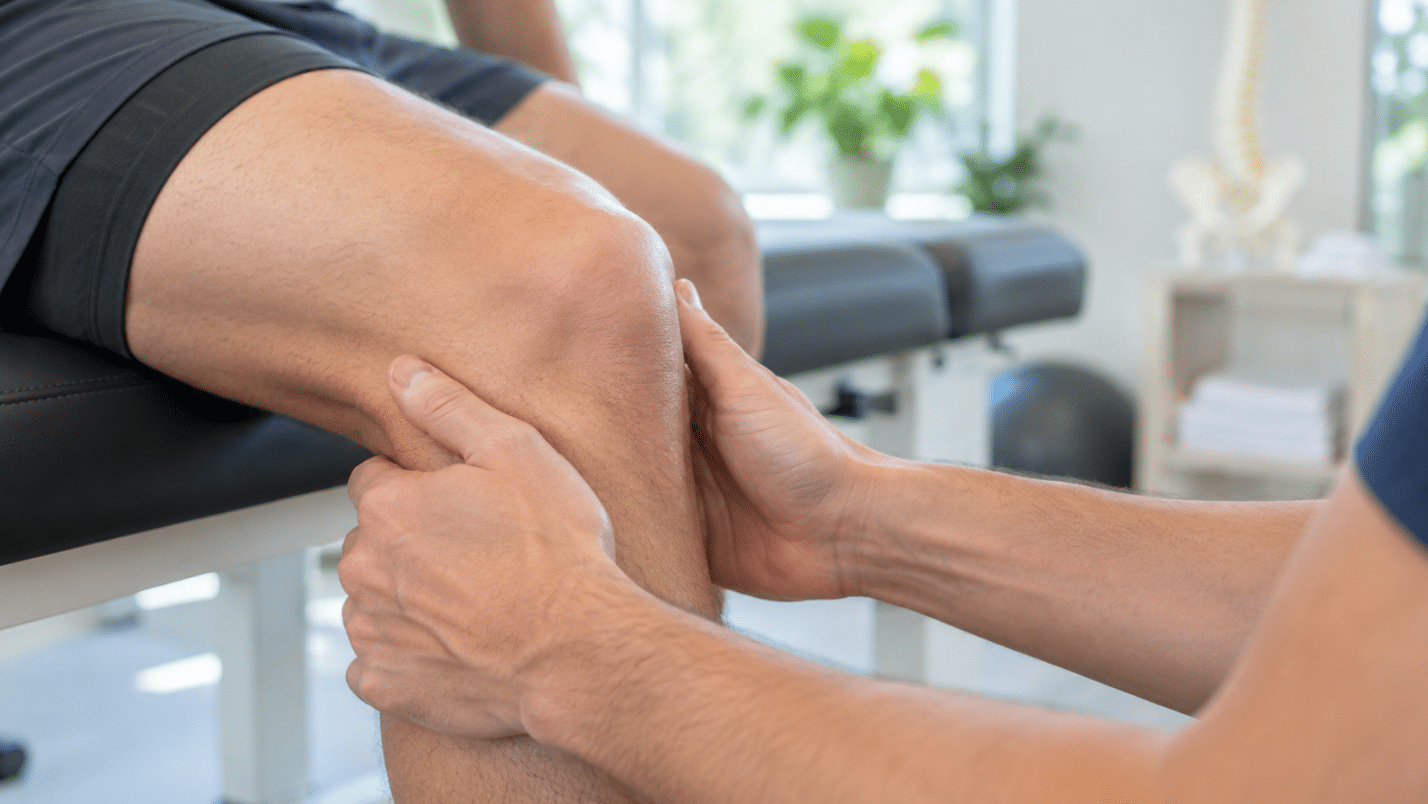
At your first visit, the chiropractor will ask about your knee symptoms, check your range of motion, and create a care plan before any treatment begins. This sequence protects you from receiving care that doesn’t match your specific knee condition.
Expect a health history intake, a physical exam of the knee joint and surrounding muscles, and possibly posture or gait analysis. We’ll also look at connected areas like the hip, lower back, and ankle. Those areas contribute to knee pain more often than people expect, and evaluating them gives us a clearer picture of what’s actually driving your discomfort rather than just treating the spot that hurts.
If imaging like an X-ray or MRI is needed, we can provide referrals. First visits typically take longer than follow-ups, which move faster once the care plan is set.
Will You Get Treatment on Your Very First Visit?
Whether you receive treatment on the first visit depends on what the exam reveals. The typical order of events at a first chiropractic visit for knee pain is:
- Check-in and intake. You confirm your health history and reason for the visit.
- Symptom review. The chiropractor asks about pain location, onset, and what makes it better or worse.
- Physical exam. Range of motion, joint stability, and muscle strength around the knee are tested.
- Diagnosis discussion. The chiropractor explains what’s found and which treatments apply.
- First treatment or referral. An adjustment, soft tissue work, or a referral for imaging begins the care process if appropriate.
Can a Chiropractor Actually Help Knee Pain?
Yes, chiropractors can help many types of knee pain by improving joint alignment, reducing muscle tension, and addressing biomechanical problems that place extra stress on the knee. The key word is “many,” because not every knee condition falls within chiropractic scope, and we’d rather be honest about that upfront than oversell what we can do.
Common knee conditions we treat include patellar tracking issues (where the kneecap shifts off its normal path), IT band syndrome, runner’s knee, and knee pain caused by misaligned hips or feet. These are movement-based problems, and chiropractic care directly addresses how the body moves.
Chiropractic care doesn’t replace orthopedic surgery for structural damage like torn ACLs. What it does well is support recovery and reduce pain in the surrounding muscles and soft tissue. Manual adjustments to the knee, hip, or lumbar spine can restore proper movement patterns that take pressure off the knee joint.
What Types of Knee Pain Respond Best to Chiropractic Care?
Knee pain linked to poor movement mechanics tends to respond best to chiropractic care. This includes overuse injuries from running or cycling, pain that worsens when climbing stairs, and knee discomfort tied to flat feet or hip imbalance.
Soft tissue work, therapeutic exercises, and lifestyle advice are often combined with adjustments for better outcomes. Knee pain is among the musculoskeletal conditions that fall within chiropractic scope of practice, which gives you a reliable reference point when researching your options.
When Should You Go to the ER Instead of a Chiropractor for Knee Pain?
Go to the emergency room if your knee is severely swollen, deformed, unable to bear any weight, or if you heard a loud pop at the time of injury. These signs point to possible fractures, dislocations, or major ligament tears that need imaging and emergency evaluation before anything else.
Signs like numbness spreading down the leg, a locked knee joint, or knee pain following a high-speed car accident also warrant ER care first. If you were in a car accident in Centennial, please go to emergency care before booking with us. We’ll be here when the ER clears you.
After an ER visit rules out fractures or tears, we can often help with the rehabilitation and pain management phase that follows. We’ll always refer out if a condition is beyond our scope. That referral is a safety check, not a delay.
Can You See a Chiropractor the Same Day as an ER Visit?
In most cases, it’s best to let the ER team complete their evaluation before pursuing additional care. Treatment decisions should follow from those results.
Watch for these five red-flag symptoms that mean you should go to the ER first, not a chiropractor:
- Visible knee deformity or bone pressing against the skin
- Knee that cannot bear any weight at all
- Loud pop heard at the moment of injury
- Severe swelling that develops within minutes
- Numbness, tingling, or loss of sensation below the knee
How to Speed Up Getting a Knee Pain Appointment in Centennial
The fastest way to get a knee pain chiropractic appointment in Centennial is to contact our office when it opens, describe your pain clearly, and have your insurance card ready. Doing all three at once gives our front desk everything needed to book you without any back-and-forth.
We offer online booking outside of office hours too. If that works for you, requesting an appointment the evening before means your name may already be on the schedule before the phones open. Mentioning what caused your knee pain when you book (a sports injury or a fall, for example) helps us understand how to best fit you in.
If we genuinely can’t get you in quickly, Centennial has other chiropractic options and we’re happy to help point you in the right direction rather than leave you without care.
Does Calling vs. Booking Online Get You a Faster Appointment?
Calling can be more effective for urgent scheduling because a staff member can assess your situation directly. Online booking is useful outside of office hours when no one is available to answer.
Here’s a simple checklist to speed up your booking no matter how you reach out:
- Contact us at opening time or use online booking after hours. Both get your name in early.
- Describe your knee pain as sudden or acute. Specific descriptions help our staff understand how urgently you need to be seen.
- Have your insurance card and photo ID ready. Missing these is one of the most common causes of check-in delays.
- Ask about completing intake forms before you arrive. That turns paperwork time into exam and treatment time.
Does Using Insurance Slow Down Your Knee Pain Chiropractic Appointment?
Using insurance doesn’t usually delay your appointment. We handle insurance verification as part of scheduling so it doesn’t add significant time on the day of your visit.
If you were in a car accident, Colorado’s personal injury protection (PIP) coverage (which is part of auto insurance policies in the state and covers immediate medical care after an accident regardless of fault) may apply to your chiropractic visit. Tell us about your situation when you book and we can walk you through how the billing works before you arrive.
Self-pay patients can often be seen just as efficiently. Bringing your insurance card and a photo ID speeds up check-in regardless of how you’re paying.
What If Your Insurance Does Not Cover Chiropractic for Knee Pain?
If your plan doesn’t cover chiropractic care, or if knee treatment requires a higher copay than expected, ask our front desk about self-pay rates before your appointment. We have straightforward pricing for new patient exams and follow-up visits.
Flexible spending accounts (FSAs) and health savings accounts (HSAs) typically cover chiropractic care as a qualifying medical expense under IRS Publication 502. Using one of those accounts means your knee pain care is paid with pre-tax dollars, which lowers your real cost even without direct insurance coverage. It’s worth checking your balance before you assume it’s fully out of pocket.
The Bottom Line
Many Centennial residents with knee pain can get a chiropractic appointment quickly by calling early and describing their symptoms clearly. Your first visit typically includes a full exam, movement assessment, and possibly an initial treatment. Knowing when to go to the ER first keeps you safe and sets up a smoother path to recovery. If you want to understand the full picture before you call, take a look at our page on knee pain chiropractic care in Centennial and then reach out. We’re glad to help you figure out the next step.