
How Many Chiropractic Visits Does Whiplash Treatment Usually Take?
Home / Whiplash Treatment / How Many Chiropractic Visits Does Whiplash Treatment Usually Take?
How Many Chiropractic Visits Does Whiplash Treatment Usually Take?
By Butler Family Health Center · Published 2026-09-19 · Last updated 2026-09-19
Whiplash recovery varies widely depending on injury severity, and the number of chiropractic visits required reflects that range. Mild whiplash tends to resolve more quickly, while moderate and severe cases involving nerve symptoms take considerably longer. A chiropractor will assess your injury grade, track your progress at regular intervals, and adjust the treatment plan throughout recovery. No two cases are identical, so only a hands-on examination can produce an accurate visit estimate for your specific injury. We mean that literally, we can’t give you a number over the phone, and anyone who does isn’t doing you any favors.
What Affects How Many Visits You Need for Whiplash?
The number of visits depends on injury grade, your age, overall health, and how soon you started care. These four factors shape nearly every whiplash recovery plan a chiropractor builds.
Higher-speed collisions usually cause more soft tissue damage. More damaged tissue means more time for the body to repair itself, and more visits to support that repair.
Older patients and those with prior neck injuries often need more visits than younger, healthier patients. The body’s healing rate slows with age, and a previously injured neck starts recovery at a disadvantage.
Waiting weeks before seeing a chiropractor can allow inflammation to worsen. Chronic inflammation makes soft tissue harder to treat and often adds visits to the plan. We’d rather see you early and do less than see you six weeks in and have to work around what’s already hardened up.
Pre-existing conditions like arthritis or disc degeneration can slow recovery further. These conditions don’t make chiropractic care impossible, but they do make it less predictable.
Does the Type of Car Accident Change How Many Visits You Need?
Yes, the collision direction matters. Rear-end impacts put sharp force on the cervical spine and are a common cause of whiplash. Side-impact crashes can injure muscles and ligaments on one side more than the other, sometimes requiring different techniques and a longer care plan. Head-on collisions at high speed often produce the most severe injuries and the highest visit counts.
The factors that most reliably affect your total visit count:
- Injury grade (how severe the whiplash is on the Quebec Task Force scale)
- Age and baseline health (older patients and those with prior injuries typically need more care)
- Time to treatment (coming in early consistently means fewer visits overall, in our experience)
- Pre-existing spinal conditions (arthritis or disc problems slow the healing process)
- Patient compliance (attending every scheduled visit and following at-home advice shortens recovery)
How Do Chiropractors Grade Whiplash Severity?
Chiropractors use the Quebec Task Force whiplash grading scale, ranging from Grade 0 to Grade 4, to measure how serious the injury is. The grade assigned after your exam directly shapes how many visits your plan will include.
Grade 1 means neck pain and stiffness with no physical signs detected during examination. Grade 1 injuries are the least severe and typically resolve in a shorter timeframe.
Grade 2 involves reduced range of motion and muscle tenderness that a chiropractor can confirm by touch and movement testing. Grade 2 injuries require a more extended course of care.
Grade 3 includes neurological symptoms such as tingling, numbness, or weakness radiating into the arm. The whiplash injury overview from the National Institute of Neurological Disorders and Stroke notes that nerve-related symptoms indicate deeper tissue involvement, and Grade 3 cases require a longer, more involved treatment plan. If you’re noticing anything going down your arm, don’t wait on that.
Grade 4 involves fractures or dislocations confirmed by imaging. Grade 4 injuries require medical co-management and go beyond what chiropractic care alone addresses.
What Does a Grade 2 Whiplash Treatment Plan Look Like?
Grade 2 is a commonly seen injury level after rear-end accidents. A typical Grade 2 plan starts with more frequent visits during the first two to three weeks, then reduces in frequency as range of motion returns. The chiropractor reassesses the patient at regular intervals and adjusts frequency based on measurable progress.
GradeSymptomsTypical Recovery PaceExpected TimelineGrade 1Neck pain, stiffness, no physical signsFewer visits, shorter durationA few weeksGrade 2Reduced motion, muscle tendernessModerate visit frequencySeveral weeks to a few monthsGrade 3Nerve symptoms (tingling, numbness)Higher visit frequency, longer planSeveral monthsGrade 4Fracture or dislocationMedical co-management requiredVaries
What Happens at Each Stage of Whiplash Chiropractic Care?
Whiplash chiropractic care moves through three phases: acute, rehabilitative, and maintenance. Each phase has a different visit frequency and a different goal.
A drop in visit frequency is not a sign that care is ending early. It means your body is healing as planned.
- Acute Phase (Early Weeks): Visits are most frequent. The goals in this phase are to reduce inflammation, manage pain, and restore basic neck movement. Forcing aggressive rehabilitation too soon can re-injure fragile tissue, so the chiropractor works carefully within your pain-free range.
- Rehabilitative Phase (Mid-Recovery): Visits taper in frequency as strength and mobility improve. The focus shifts from pain relief to restoring full range of motion and rebuilding muscle stability around the cervical spine. Progress reassessments during this phase determine whether the plan moves forward or needs more time.
- Maintenance Phase (Ongoing as needed): Optional periodic visits help prevent setbacks and keep the spine aligned after the injury has healed. Not every patient needs this phase, and we won’t recommend care beyond what the exam supports.
What Chiropractic Techniques Are Used for Whiplash at Each Stage?
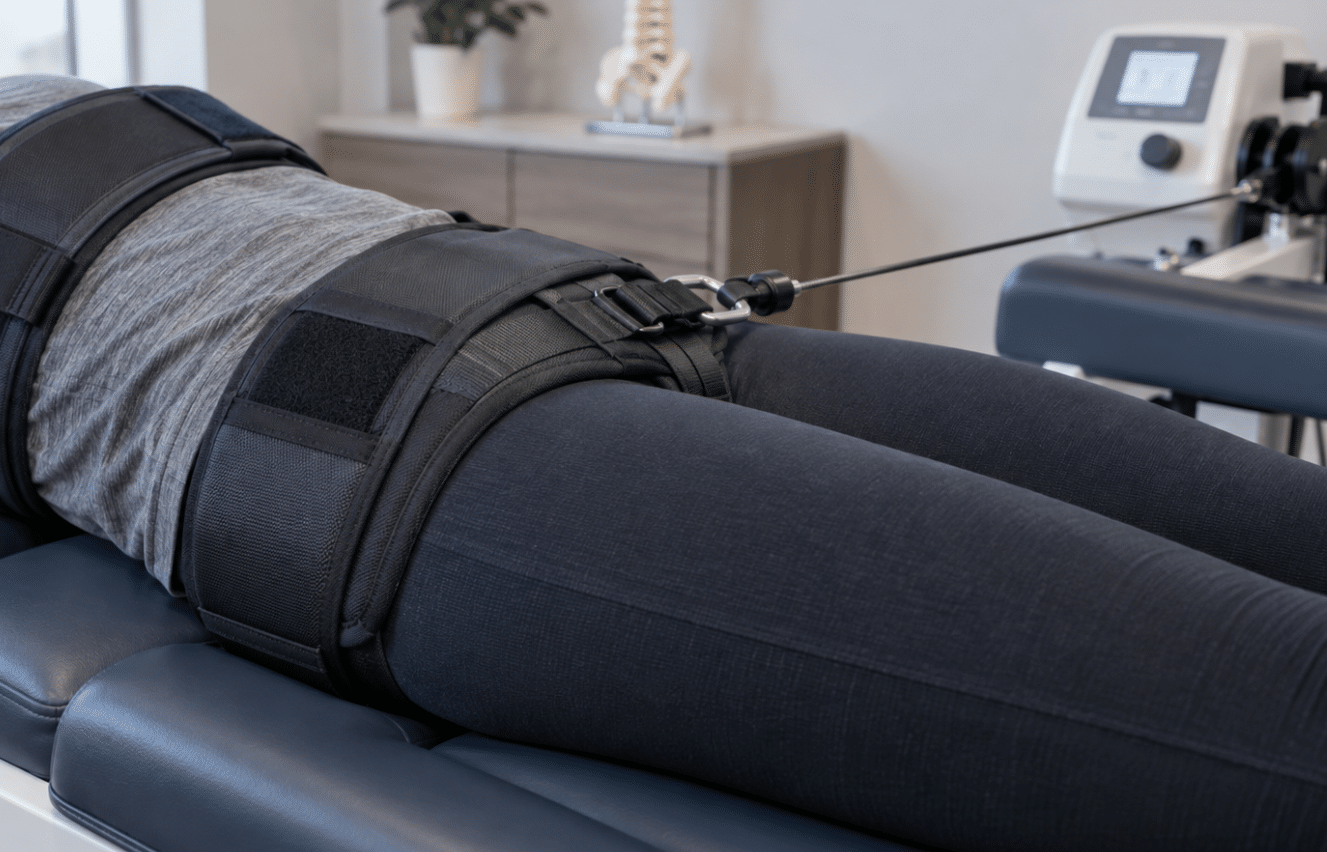
During the acute phase, chiropractors commonly use gentle cervical mobilization (slow, guided movement of the neck joints) and soft tissue therapy (manual pressure on tight or spasmed muscles) rather than high-velocity adjustments. That part’s not as scary as it sounds — it’s slow, controlled work, not the dramatic cracking most people picture. Traction, which gently elongates the cervical spine to reduce disc pressure, is often introduced in the rehabilitative phase. Spinal manipulation (the classic chiropractic adjustment) is added when inflammation has dropped enough for the joints to tolerate it without protective guarding.
How Long Does a Full Whiplash Recovery Actually Take?
Recovery time varies based on injury severity. Mild to moderate cases tend to resolve more quickly with consistent care, while severe cases or those involving disc injury take considerably longer to reach full function.
Recovery time and visit count are related but not the same number. Some patients need fewer visits spread over more weeks because their schedule or insurance allows only one visit per week. Spacing visits out can slow progress, but it doesn’t make recovery impossible.
In our experience, patients who come in within the first week after the accident consistently recover faster than those who wait. We see that pattern over and over. If you’re on the fence about calling, that’s your reason to go ahead and call.
Skipping scheduled visits or stopping care too soon are the most common reasons recovery takes longer than expected. Inflammation that’s only partially treated tends to return and harden into chronic stiffness. We see this more than we’d like to.
Is Whiplash Pain That Lasts More Than 3 Months a Warning Sign?
Yes. Whiplash pain that continues beyond 3 months is classified as chronic whiplash. Chronic whiplash is not simply a longer version of acute whiplash. It often involves a process where the nervous system becomes overly sensitive to pain signals even after the original tissue damage has healed, your body’s alarm system gets stuck on even when the original fire is out. Patients with chronic whiplash typically need a different care approach, and some benefit from co-management with a physical therapist or pain specialist. If your pain is still present at the 12-week mark, tell your chiropractor rather than assuming more of the same treatment is the answer.
Can You Speed Up Whiplash Recovery Between Visits?
Yes, what you do between visits matters almost as much as the adjustment itself. Patients who follow at-home guidance consistently tend to need fewer total visits than those who don’t.
Applying ice for the first 48 to 72 hours after the accident reduces swelling and soreness between early visits. Use it for 15 to 20 minutes at a time with a cloth barrier between the ice pack and skin.
Gentle range-of-motion exercises prescribed by your chiropractor help rebuild movement without re-injuring healing tissue. Don’t substitute exercises you find online for the specific movements your chiropractor prescribes for your grade of injury. The internet doesn’t know what grade you are.
Staying well hydrated supports disc and soft tissue repair. It sounds simple, but we genuinely remind patients about this every week because it makes a real difference in how tissue heals.
Avoiding heavy lifting, prolonged screen time, and sleeping on your stomach reduces strain on healing neck muscles. Each of these habits places the cervical spine in positions that pull on the same ligaments and muscles that were injured.
What Exercises Can You Do at Home During Whiplash Recovery?
Your chiropractor will build a specific home exercise program for your injury grade. As a general framework, these are the types of movements commonly prescribed:
Between-visit habits that support faster recovery:
- Gentle chin tucks: Slowly pull the chin straight back (not down) to restore neutral cervical alignment
- Slow side-to-side head turns: Move only within your pain-free range and stop before any sharp pain
- Shoulder blade squeezes: Strengthen the upper back muscles that support the neck
- Ice application: 15 to 20 minutes after activity or at the end of the day during the acute phase
- Cervical-support pillow use: Keeps the neck in a neutral position overnight to reduce morning stiffness
When Should You Stop Chiropractic Care for Whiplash?
You should stop active chiropractic care when your chiropractor confirms you have reached maximum medical improvement or full symptom resolution. Maximum medical improvement means the injury has healed as fully as it’s expected to heal, even if some residual stiffness remains.
Ending care too early, before inflammation fully clears, raises the risk of chronic neck pain and recurring stiffness. The body needs time to remodel repaired tissue, and stopping care before that process completes often leads patients back to the clinic weeks later. Honestly, that’s the outcome we most want to help you avoid.
Signs that you may be ready to graduate from active care include no pain at rest, full range of motion restored to pre-accident levels, and no numbness or tingling in the arms or hands. All three conditions should be present, not just one.
What Happens If Whiplash Symptoms Come Back After You Stop Care?
If symptoms return weeks or months after stopping care, schedule a reassessment visit. The chiropractor will re-examine your range of motion and neurological status before recommending a new plan. Restarting a full care plan from scratch is rarely necessary. A short follow-up course of visits often resolves a relapse, especially when you come back quickly rather than waiting for symptoms to worsen.
For patients in Centennial with open personal injury claims, maintaining documentation of visit count, symptom progress notes, and discharge records supports the accuracy of the legal record. Ask your chiropractor about obtaining a summary of care at discharge.
What to Expect at Your First Whiplash Visit in Centennial
Your first whiplash visit in Centennial focuses on assessment, not adjustment. We need a complete picture of your injury before beginning treatment, and rushing into an adjustment without that picture is one of the most common mistakes in early whiplash care.
Expect a review of the accident details, your current symptoms, and your full medical history. The more specific you can be about when the pain started, where it radiates, and what makes it better or worse, the more accurate the initial plan will be.
We’ll test your range of motion in all six directions of neck movement, check for nerve involvement with orthopedic and neurological tests, and may order cervical X-rays if the exam suggests joint or disc involvement. X-rays rule out fractures before any spinal manipulation is performed.
From that exam, we build a personalized care plan with a projected visit count and timeline. That projection is a starting estimate, not a guarantee. It gets updated as your body responds to care.
Do You Need a Referral to See a Chiropractor After a Car Accident in Colorado?
No. Colorado doesn’t require a physician referral to see a chiropractor after a car accident. You can schedule directly with a chiropractic clinic on your own. Bring your auto insurance information to the first visit and ask your insurer about your specific coverage for medical care following an accident.
If you were recently in an accident and want to understand your visit plan before committing, whiplash treatment at our Centennial chiropractic clinic explains what to bring to your first visit and how we build your care plan from the initial exam forward.
The Bottom Line
Whiplash recovery varies by injury grade, and the number of chiropractic visits reflects that variation. Mild cases tend to resolve in a shorter timeframe, while severe cases involving nerve symptoms can require several months of care. Starting care quickly after the accident, attending every scheduled visit, and following at-home advice are the three biggest factors in keeping total visit count as low as possible. Every case is different, and only a hands-on exam can give you an accurate estimate for your specific injury. If you’re not sure where to start, that’s exactly what we’re here for.