
Do I Need An MRI Before Starting Spinal Decompression Therapy In Centennial CO?
Home / Spinal Decompression Therapy / Do I Need an MRI Before Starting Spinal Decompression Therapy in Centennial CO?
Do I Need An MRI Before Starting Spinal Decompression Therapy In Centennial CO?
By Butler Family Health Center · Published 2026-09-17 · Last updated 2026-09-17
You do not always need an MRI before starting spinal decompression therapy in Centennial CO, but the answer depends on your specific condition and health history. Many patients begin care after a thorough physical exam, orthopedic tests, and a review of symptoms alone, with no imaging required. An MRI becomes important when we need to confirm a disc herniation, rule out contraindications, or check for conditions that make decompression unsafe. Red flags like numbness, leg weakness, a history of spinal surgery, or unexplained night pain make imaging a required step before treatment begins. Knowing whether you need an MRI before starting spinal decompression therapy in Centennial CO helps you start care faster and more safely. Your provider will decide based on your pain history, physical findings, and how long symptoms have been present.
What Is Spinal Decompression Therapy and How Does It Work?
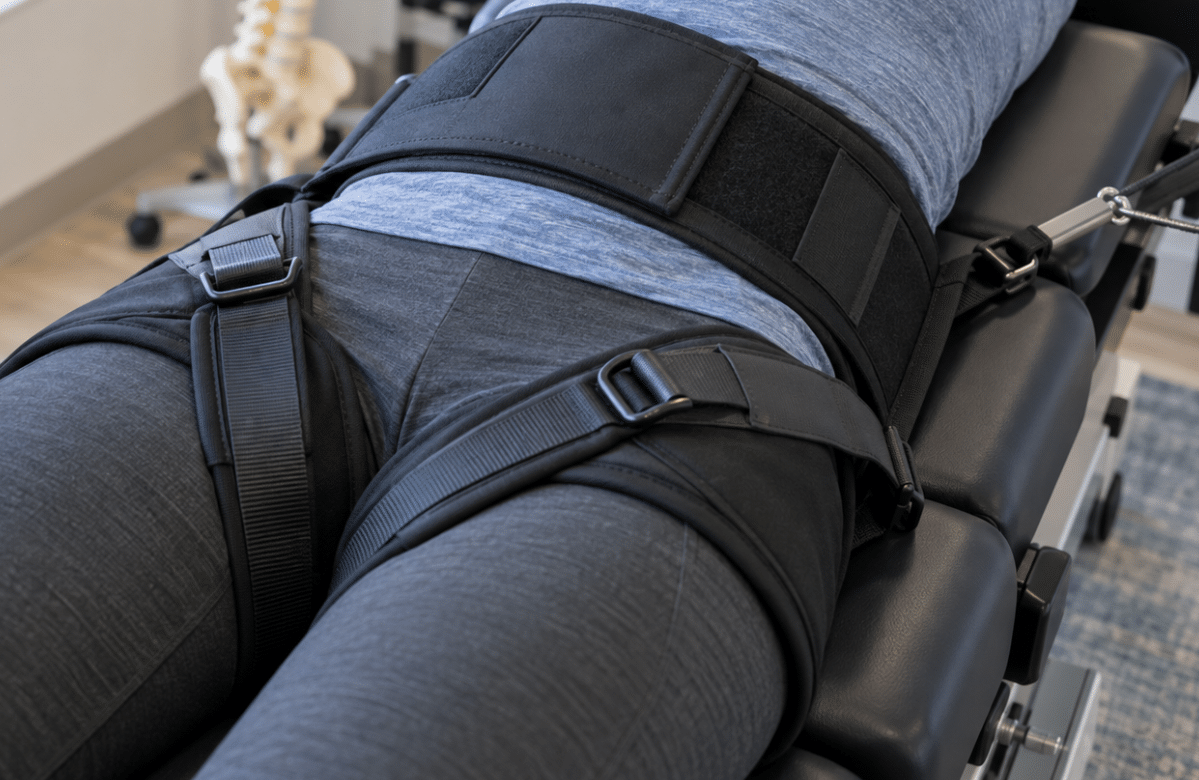
Spinal decompression therapy is a non-surgical treatment that gently stretches the spine to relieve pressure on compressed discs and nerves. A motorized table slowly pulls the spine in controlled cycles, creating negative pressure inside the disc. That negative pressure helps draw herniated or bulging disc material back toward the center of the disc. Nutrients, oxygen, and fluids can then flow back into the disc, supporting natural healing over time.
Sessions are generally non-painful, and most patients tell us they’re surprised by that. Most people need a series of sessions spaced across several weeks to see lasting results, and the length of each session varies by treatment plan.
What Conditions Does Spinal Decompression Treat?
Spinal decompression therapy is most often recommended for disc-related spine conditions. The most common reasons patients in Centennial CO seek this treatment include:
- Lumbar disc herniation — a disc that has pushed outward and presses on a nearby nerve
- Sciatica — nerve pain that travels from the lower back down through the leg
- Degenerative disc disease — gradual disc breakdown that causes chronic low back pain
- Bulging discs — discs that have widened and press against spinal structures without rupturing
- Facet syndrome — pain caused by worn or inflamed joints along the back of the spine
Having one of these conditions doesn’t automatically make you a good candidate. A full clinical evaluation determines whether decompression is the right approach for your specific situation.
What Does a Chiropractor Look for Before Recommending Spinal Decompression?
Before recommending spinal decompression, a chiropractor evaluates your symptoms, spine range of motion, nerve function, and overall health history. The initial exam includes orthopedic and neurological tests to locate the source of pain and assess nerve involvement. Findings from those tests help us build a clinical picture without relying immediately on imaging.
We also check for red flags, including signs of fracture, spinal tumors, active infection, or severe osteoporosis. Any of those findings would make decompression unsafe and would require a different care path. A detailed symptom timeline helps us decide whether imaging is needed or whether hands-on findings are enough to proceed.
Patients with recent trauma, post-surgical hardware in the spine, or pain with no clear mechanical cause are more likely to need imaging before starting. We weigh all of those factors together before making a recommendation.
What Questions Will a Chiropractor Ask at a First Visit for Back Pain?
At your first visit, your chiropractor will gather a detailed picture of your condition before recommending any treatment. Expect questions about:
- How long you’ve had back or leg pain and whether anything triggered it
- Whether you’ve tried physical therapy, injections, or other chiropractic care
- Whether you were in a car accident or any trauma involving the spine
- What medications you’re taking, particularly blood thinners, steroids, or anything that affects bone density
- Whether you’ve noticed numbness, tingling, or weakness in your arms or legs
Honest answers help us make a faster and safer decision about whether decompression is right for you and whether an MRI needs to come first.
When Is an MRI Required Before Spinal Decompression Therapy?
An MRI is required before spinal decompression therapy when imaging is the only reliable way to confirm a diagnosis or rule out a dangerous condition. We’ll require an MRI if you have numbness, progressive leg weakness, or any loss of bladder or bowel control. Those symptoms suggest nerve compression severe enough that we need to see the exact cause before applying any mechanical force to the spine. We won’t move forward on that without the imaging.
Patients with a history of spinal surgery, spinal fusion hardware, or suspected spinal instability also need MRI review before treatment begins. The hardware used in fusion surgery is an absolute contraindication for decompression, and we need to confirm its presence and location. An MRI is also necessary when prior conservative care failed and we need to see exact disc position before proceeding.
Cancer history or unexplained night pain that wakes you from sleep are red flags that make imaging mandatory before any spinal treatment begins. Those symptoms can point to a spinal tumor or systemic disease rather than a mechanical disc problem.
Can a Herniated Disc Be Treated With Decompression Without an MRI?
A herniated disc can sometimes be treated with decompression without an MRI when clinical findings alone clearly support the diagnosis. If your orthopedic tests are positive, your pain pattern matches a specific disc level, and you have no red flags, we may begin treatment based on exam findings alone. But when symptoms are severe or don’t follow a predictable nerve pattern, an MRI confirms the exact disc level and degree of herniation before we commit to a decompression plan.
What Does an MRI Show That an X-Ray Cannot for Spinal Decompression Candidates?
X-rays show bone structure well, but spinal decompression targets soft tissue. An MRI is the only standard imaging tool that shows the discs, spinal cord, and nerve roots clearly. The table below outlines the key differences:
FeatureMRIX-RayDisc herniation visibilityYes, clearlyNoNerve root compressionYesNoSpinal cord detailYesNoBone fracturesModerateYes, clearlySpinal hardware locationYesYesTumors or infection in spineYesLimited
For decompression planning, an MRI gives us information that an X-ray simply can’t provide.
When Can You Start Spinal Decompression Without an MRI?
You can often start spinal decompression without an MRI if your symptoms are mild to moderate, your health history is straightforward, and physical exam findings point clearly to a disc-related problem. Patients with no red flags, no trauma history, and no prior spine surgery are frequently cleared for care after a physical exam alone. The clinical evidence from orthopedic tests can be strong enough to support a confident diagnosis without imaging.
If symptoms don’t improve after an appropriate course of treatment, we may order or request an MRI to reassess whether the original clinical picture was accurate. That outcomes-based approach is common in chiropractic practice and keeps care moving without unnecessary delays.
Starting sooner without imaging can reduce pain faster when the clinical picture is clear and contraindications are absent. We monitor your progress at each session and adjust the plan if symptoms change.
What Orthopedic Tests Replace an MRI for Initial Spinal Decompression Screening?
Several hands-on tests help us confirm a disc problem without imaging. Each one stresses the spine in a controlled way to reproduce or rule out specific patterns of pain, and none of them are as intimidating as they sound.
Straight-leg raise, you lie flat and we lift your leg slowly. If you feel sciatica-type pain below the knee before the leg reaches 70 degrees, that points toward lumbar disc involvement.
Kemp’s test, you stand while we guide your spine into extension and rotation. If leg pain comes on during that movement, it suggests a disc or facet joint source.
Valsalva maneuver, you bear down as if straining. If that increases your back or leg pain, it suggests a disc is pressing on a spinal nerve.
Dermatomal sensation check, we test light touch and pinprick along specific skin zones to map which nerve root may be affected.
When more than one of these tests comes back positive, we have strong clinical confidence to begin decompression without waiting for an MRI.
What Are the Contraindications for Spinal Decompression Therapy?
Spinal decompression therapy is not safe for everyone, and knowing the contraindications is one reason some patients need an MRI before starting. An MRI can reveal conditions that would make decompression dangerous, allowing us to redirect care before any treatment is applied. We’d rather find that out at the consultation than after treatment has already started.
Severe disc extrusion or sequestration, where disc material has broken free and floats in the spinal canal, may require surgical evaluation before any decompression attempt. Aortic aneurysm, active spinal infection, and cauda equina syndrome (sudden loss of bowel, bladder, or leg function from nerve compression) are serious contraindications that make imaging urgent. Patients with any of those conditions identified on an MRI will be referred out rather than treated with decompression.
Absolute Contraindications for Spinal Decompression Therapy
The following conditions are absolute contraindications, meaning decompression cannot be performed if any of these are present:
- Spinal fractures — compression fractures or unstable vertebral breaks make traction forces directly dangerous
- Spinal tumors — primary bone tumors or metastatic cancer involving the spine
- Advanced osteoporosis — severe bone density loss
- Spinal implants or hardware from prior surgery — rods, screws, cages, or artificial discs
- Pregnancy — lumbar decompression is contraindicated
- Cauda equina syndrome — acute nerve bundle compression requires immediate surgical referral
If your MRI reveals any of those conditions, we won’t proceed with decompression. We’ll coordinate appropriate next steps for your care instead.
Is Spinal Decompression Safe After Back Surgery?
Spinal decompression after back surgery depends entirely on the type of surgery performed. Patients with spinal fusion hardware in place can’t receive decompression at the fused segment. The device prevents safe movement, and the mechanical force could stress the hardware. Patients who had a laminectomy (removal of a small portion of bone to relieve nerve pressure) without hardware implantation may be approved for decompression at a different spinal level, provided an MRI confirms the current anatomy. Each post-surgical case requires individual MRI review before any decision is made.
How Does Centennial CO Chiropractic Care Handle MRI Referrals?
Chiropractic offices in Centennial CO can refer patients for an MRI through imaging centers nearby when clinical findings indicate imaging is necessary. In Colorado, a chiropractor can write a referral order for an MRI, and imaging centers fulfill that order directly. You don’t need a referral from a medical doctor first.
Many Centennial-area imaging facilities accept referrals from chiropractic providers, and scheduling timelines vary by facility. We can help direct you to a facility that fits your schedule when imaging is required.
If you were injured in a car accident and we determine imaging is medically necessary, we can coordinate that referral as part of your injury documentation. In those cases, MRI costs may be covered under your auto insurance personal injury protection (PIP) policy rather than your health insurance.
Does Insurance Cover an MRI Ordered by a Chiropractor in Colorado?
Coverage for an MRI ordered by a chiropractor in Colorado varies by plan. Health insurance plans that include chiropractic benefits sometimes cover imaging ordered by a chiropractic provider, but coverage terms differ by carrier and plan. Call the member services number on your insurance card and ask specifically whether MRI referrals from chiropractors are covered under your plan. It’s worth a five-minute call before assuming it’s out of pocket.
Auto accident patients in Colorado may have additional coverage options. PIP coverage, which Colorado law requires on auto policies, can pay for diagnostic imaging related to injuries from the accident, including MRIs ordered by a chiropractor. We can help document the medical necessity needed for that authorization. For patients without insurance or with high deductibles, asking the imaging center directly about available pricing options is a practical first step.
What Happens During Your First Spinal Decompression Consultation in Centennial CO?
Your first spinal decompression consultation in Centennial CO includes a health intake, physical exam, and a conversation about whether imaging is needed before treatment begins. We review your symptom history, prior treatments, and any existing X-rays or MRIs you already have on hand. Bringing prior imaging to the first visit can save time and may allow us to start planning your care without ordering new imaging.
If you bring a recent MRI from another provider, we can review it and use it to help plan your care without necessarily ordering a new scan. Patients who are good candidates leave the first visit with a clearer sense of next steps. Those who need imaging first receive a referral so care isn’t delayed longer than necessary.
Residents of Centennial neighborhoods including Smoky Hill, Piney Creek, Willow Creek, and Foxridge are close to local chiropractic offices serving the area. Getting seen promptly after symptoms start tends to produce better outcomes for disc-related conditions, so don’t wait longer than you need to.
Should I Bring My Old MRI Results to My First Chiropractic Appointment?
Bringing prior MRI results to your first chiropractic appointment can help speed up your care. Providing the actual imaging files alongside the written radiology report gives us the ability to review disc position, nerve involvement, and anatomy directly rather than relying on a written summary alone. Bring both if you have them.
If your MRI was done some time ago, or if your symptoms have changed significantly since the scan, we may still request updated imaging. Disc herniations can change in size and position over time, meaning an older scan may not reflect your current anatomy. When in doubt, bring whatever you have and let us assess whether the existing images are current enough to use for treatment planning.
The herniated disc overview from the National Institute of Neurological Disorders and Stroke is a reliable resource if you want to understand more about how disc injuries are diagnosed and what imaging typically reveals.
The Bottom Line
You do not always need an MRI before starting spinal decompression therapy. Your chiropractor at Butler Family Health Center decides based on your exam findings, symptom history, and any red flags present. Conditions like spinal fractures, surgical hardware, or severe neurological symptoms make an MRI a required step before treatment begins. When imaging is needed, we can refer you directly to a local imaging center so your care moves forward without unnecessary delay. To understand the full process and what each session involves, learn what to expect from spinal decompression therapy at our Centennial CO chiropractic office.