
Can A Chiropractor In Centennial Treat Knee Pain Without Surgery?
Home / Blog / Can a Chiropractor in Centennial Treat Knee Pain Without Surgery?
Can A Chiropractor In Centennial Treat Knee Pain Without Surgery?
By Butler Family Health Center · Published 2026-09-20 · Last updated 2026-09-20
Yes, a chiropractor in Centennial can treat knee pain without surgery using hands-on, drug-free methods. Chiropractors use joint adjustments, soft-tissue therapy, and targeted exercises to reduce knee pain and restore movement. Conditions like runner’s knee, IT band syndrome, osteoarthritis, and patellar tracking problems often respond well. Treatment works by reducing joint stress, improving alignment, and addressing the root mechanical cause rather than masking symptoms. Chiropractic care is non-invasive, carries no surgical risks, and typically lets patients stay active during recovery. Results vary by condition severity, so a thorough exam helps determine whether chiropractic care alone is the right path.
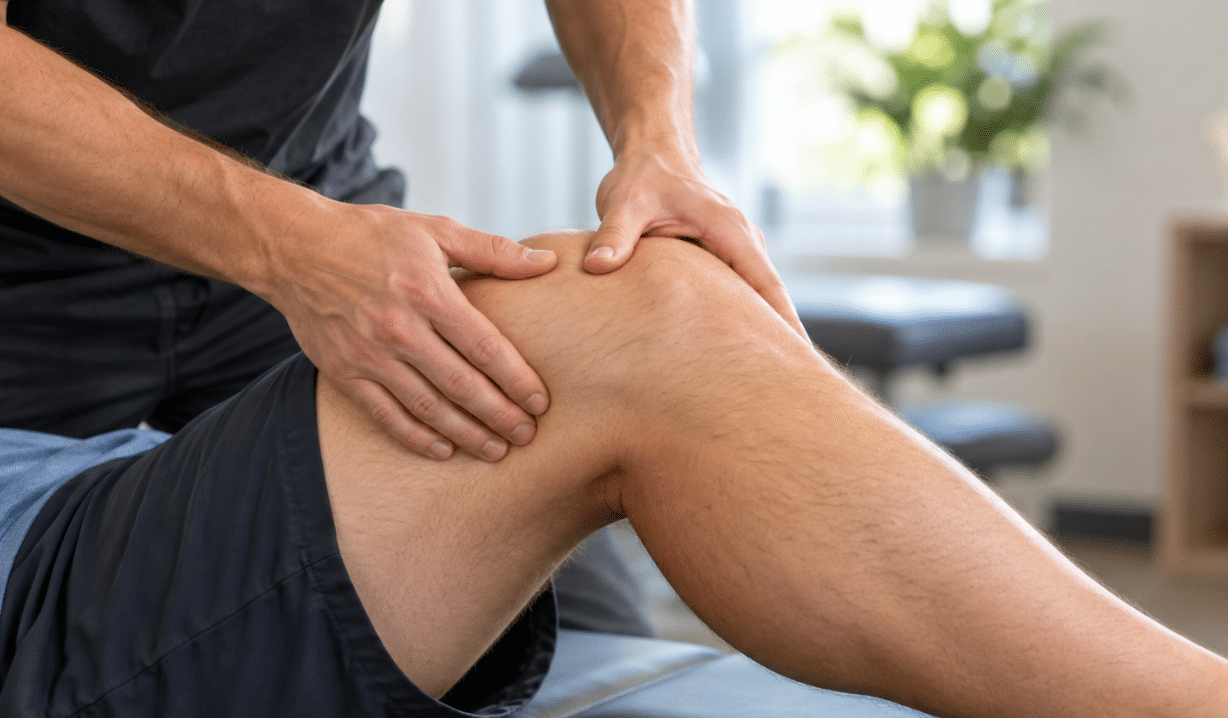
What conditions cause knee pain that chiropractors can treat?
Chiropractors commonly treat knee pain caused by joint misalignment, muscle imbalances, overuse injuries, and early-stage arthritis. These are mechanical problems, meaning the knee’s movement and load distribution have gone wrong in a way that conservative care can correct.
Runner’s knee (patellofemoral pain syndrome) is one of the most frequent conditions we see. It causes pain around and behind the kneecap and is common among active adults. IT band syndrome is another condition we regularly address. Cyclists and runners who cover long distances on local trails often develop tightness along the outer thigh and knee, and soft-tissue chiropractic techniques address the IT band directly. Osteoarthritis causes knee cartilage to break down over time; chiropractic care reduces the mechanical stress that speeds up that breakdown, which can slow progression and reduce daily pain. Patellar tracking problems occur when the kneecap moves out of its normal path during bending and straightening. Adjustments combined with targeted exercises correct the muscle pull that causes this pattern.
Knee conditions that respond well to chiropractic care:
- Runner’s knee (patellofemoral pain syndrome)
- IT band syndrome
- Mild to moderate knee osteoarthritis
- Patellar tracking dysfunction
- Ligament sprains (partial, not complete tears)
- Meniscus irritation without full structural tear
What knee conditions are not good fits for chiropractic care?
Some knee injuries need surgical repair, not conservative care. A chiropractor will identify these at the first exam and refer you to the right specialist without delay. Complete ACL, PCL, or MCL tears fall into this category, as do severe meniscus tears with mechanical locking, knee fractures or bone fragments in the joint, and advanced osteoarthritis with bone-on-bone contact requiring replacement. If we see any of those at your exam, we’ll tell you plainly and get you to the right hands. No runaround.
How does chiropractic care relieve knee pain?
Chiropractic care relieves knee pain by restoring proper joint alignment, reducing inflammation, and correcting the movement patterns that place excess stress on the knee. The approach goes beyond treating the spot that hurts.
The knee doesn’t work in isolation. Hip misalignment, ankle pronation, and a tight lower back all change how the knee absorbs force during walking, running, and climbing stairs. We assess the full kinetic chain, foot, ankle, knee, hip, and spine, because a problem anywhere in that sequence shifts load onto the knee. Joint adjustments reduce restriction and improve the way the knee bends and straightens under body weight, so surrounding muscles no longer have to compensate by overworking. Soft-tissue work on the quadriceps, hamstrings, calf muscles, and IT band removes tension that pulls the kneecap and joint surfaces out of their normal positions.
Corrective exercises are prescribed to strengthen weak muscles so the knee stays stable between visits. Patients who skip home exercises typically take longer to reach their goals. Home care is as important as in-office treatment. For patients with osteoarthritis, reduced joint stress means less friction on cartilage, and that slower wear rate can make a meaningful difference over months of consistent care.
Why hip and ankle alignment affect knee pain
The knee sits between two highly mobile joints (hip and ankle) and has limited rotational freedom of its own. When the hip drops on one side or the ankle rolls inward, the knee absorbs the twist. Over time, that twist irritates the cartilage, tendons, and bursa inside the joint. Correcting hip and ankle alignment removes the source of that repetitive stress. Most patients don’t expect that part, they come in for the knee, and we’re also looking closely at their hip and foot.
What chiropractic techniques are used for knee pain?
Common chiropractic techniques for knee pain include joint manipulation, myofascial release, instrument-assisted soft-tissue mobilization, kinesiology taping, and therapeutic ultrasound. The right combination depends on your specific diagnosis and how the knee responds during the first visit.
Joint manipulation is applied directly to the knee joint to restore normal motion and reduce pain signals sent to the nervous system. Myofascial release uses hands-on pressure applied to the fascia and muscle tissue surrounding the knee to break up tightness and restore flexibility. Instrument-assisted soft-tissue mobilization (IASTM) uses a smooth, beveled tool that glides over the skin to break up scar tissue in tendons and promote healing in chronically irritated areas. Kinesiology taping applies elastic tape over the kneecap and surrounding muscles to provide support without limiting range of motion during daily activity. Therapeutic ultrasound delivers sound waves into deep tissue and is used to address soft-tissue conditions, though evidence of benefit varies by application. Cold laser (low-level laser) therapy applies low-level light energy to the knee to address inflammation; availability varies by clinic and chiropractor.
What is a chiropractic knee adjustment and does it hurt?
A chiropractic knee adjustment applies a quick, controlled force to the knee joint to restore its normal range of motion. Most patients feel mild pressure and occasionally hear a pop, which is gas releasing from the joint fluid. Not painful for most people. Patients with significant inflammation may feel brief discomfort, which fades quickly. We walk you through each step before we do it, so you know exactly what to expect — especially at a first visit.
How does chiropractic compare to surgery for knee pain?
Chiropractic care is non-invasive, carries far fewer risks than surgery, and is the right first step for most mechanical knee pain conditions. Surgery always carries risks including infection, blood clots, anesthesia reactions, and a lengthy rehabilitation period. Chiropractic avoids all of those.
Peer-reviewed research on conservative knee pain treatment published through the National Institutes of Health shows that conservative care outcomes match surgical outcomes for many cases of meniscal irritation and mild to moderate osteoarthritis. This evidence has influenced how many orthopedic specialists approach knee care. Chiropractic is also significantly less expensive than surgery, and most patients can continue normal or modified daily activity during treatment.
Surgery becomes the appropriate choice when there is a complete structural failure, such as a fully torn ACL or a fracture, that can’t heal without direct repair. Those conditions are clear exceptions, not the norm. Many orthopedic guidelines support a trial of conservative care before elective knee surgery is considered, and Centennial residents who are weighing a surgical option may benefit from a chiropractic evaluation first. We’d rather you come in for that evaluation before you’re scheduled for an operating room. Exploring chiropractic care for knee pain in Centennial gives you a full picture of what non-surgical treatment can achieve.
What does the research say about chiropractic for knee osteoarthritis?
Studies on knee osteoarthritis show that manual therapy combined with exercise produces meaningful pain reduction and functional improvement, with results comparable to outcomes seen in arthroscopic procedures for mild to moderate disease. The key finding is that the knee’s mechanical environment, meaning how it loads and moves, matters as much as the cartilage damage visible on imaging. Chiropractic addresses that mechanical environment directly.
How long does it take to see results from chiropractic knee treatment?
The timeline for improvement from chiropractic knee treatment varies by condition severity and individual factors. Some patients notice real relief in the early weeks of care, while chronic degenerative conditions may require several months of consistent treatment.
Acute injuries tend to respond faster than long-standing, degenerative conditions that have built up over years. Think a recent sprain versus something that’s been grinding away for a decade. The chiropractor’s assessment at the first visit sets a realistic timeline based on the specific diagnosis and how much structural change is present. An honest timeline helps you plan around work, sports, and daily activity. Your body weight, activity level, and sleep quality all affect how quickly the knee responds, and those are practical things worth talking through openly. Progress is measured by reduced pain scores, improved range of motion, and the ability to return to normal activities without limitation.
How many chiropractic visits does knee pain usually require?
Visit counts vary based on diagnosis, chronicity, and individual response to care. The table below reflects general ranges reported in clinical literature and practice, and your chiropractor will give you a personalized estimate after your initial exam.
Condition TypeTypical Visit RangeExpected TimelineAcute sprain or overuse flare-upVaries; generally fewer visitsWeeksRunner’s knee, IT band syndrome, patellar trackingVaries; moderate course of careWeeks to monthsMild to moderate knee osteoarthritisVaries; longer course of careMonths
When should you see a chiropractor for knee pain vs. a surgeon?
See a chiropractor first if your knee pain came on gradually, relates to activity or posture, and does not involve severe structural damage confirmed by imaging. This description fits the majority of knee pain cases seen in chiropractic practice.
In Colorado, a chiropractor can order or refer you for X-rays and MRI imaging. Getting accurate imaging rules out structural damage before starting hands-on care, and we pursue that when the exam indicates it’s needed. If your knee pain follows a car accident, a chiropractic evaluation can document your injuries accurately for insurance purposes. Patients should verify their specific coverage with their insurance provider, since benefits vary by plan. Chiropractors and orthopedic surgeons work alongside each other in the modern healthcare system, and a good chiropractor refers patients out immediately when a condition is beyond conservative care.
See a chiropractor when:
- Pain came on gradually or is activity-related
- No visible deformity after injury
- Knee bends and straightens, even if painful
- Pain follows a known pattern (running, stairs, prolonged sitting)
- You want to explore non-surgical options before committing to a procedure
See a surgeon when:
- Complete ligament rupture confirmed by MRI
- Knee locks and won’t straighten at all
- Visible deformity immediately after trauma
- Fracture confirmed by imaging
What are the warning signs that knee pain needs emergency care?
Go to an emergency room rather than a chiropractic office if your knee shows any of these signs after an injury: visible bone deformity or displacement, severe swelling that develops within one to two hours of trauma, the knee is completely locked and rigid, the skin over the joint is hot and red with fever (signs of joint infection), or you can’t bear any weight at all. These patterns suggest fracture, dislocation, or septic arthritis. All medical emergencies. A chiropractic exam is not the right starting point for these situations.
What should Centennial residents expect at their first knee pain visit?
At a first chiropractic visit for knee pain in Centennial, you can expect a full health history review, a physical and movement exam, and a clear treatment plan before any hands-on care begins.
We’ll ask about when the pain started, what makes it better or worse, your typical activity level, and any treatments you’ve already tried. A movement assessment checks how your knee bends, straightens, and handles weight-bearing, and we’ll also observe how your hip and ankle position affect where the knee tracks during movement. Orthopedic tests such as McMurray’s test (which checks the meniscus) and the Valgus stress test (which checks the inner ligament) help identify which structures are involved before any imaging is ordered. If X-rays or an MRI are needed, we’ll either take them on-site or send a referral to an imaging center based on what the exam actually shows.
What hands-on care is provided at an initial visit will depend on the individual chiropractor’s approach; ask when you schedule. Butler Family Health Center serves patients in the Centennial area, including surrounding Arapahoe County communities.
What should you bring to your first chiropractic appointment for knee pain?
Arriving prepared helps us get to an accurate assessment faster. Bring any prior imaging (X-rays, MRI reports, or radiology CDs) related to your knee, a list of current medications and supplements including any pain relievers you’re using, your insurance card and a photo ID for registration, and loose-fitting shorts or athletic wear that allows full access to the knee and hip. It also helps to jot down when the pain started and what activities make it worse before you come in. You won’t have to recall every detail under pressure that way.
Knee pain does not always mean surgery is next
Knee pain does not always mean surgery is next. For most mechanical knee conditions (including runner’s knee, IT band syndrome, patellar tracking problems, and mild osteoarthritis), chiropractic care gets to the structural source of the problem and produces real relief without an operating room. Getting the right diagnosis first is what makes the difference between a plan that works and one that wastes time. If you’re ready to find out whether conservative care is right for your knee, explore chiropractic care for knee pain in Centennial for a full overview of what treatment at Butler Family Health Center looks like.